Off-grid Energy Storage Microgrid
VGID POWER Off-grid Energy Storage Microgrid: Building AC/DC-coupled microgrids with PV, storage and diesel, covering islands, villages, mines, oilfields and hotels.
What Is an Off-grid Energy Storage Microgrid
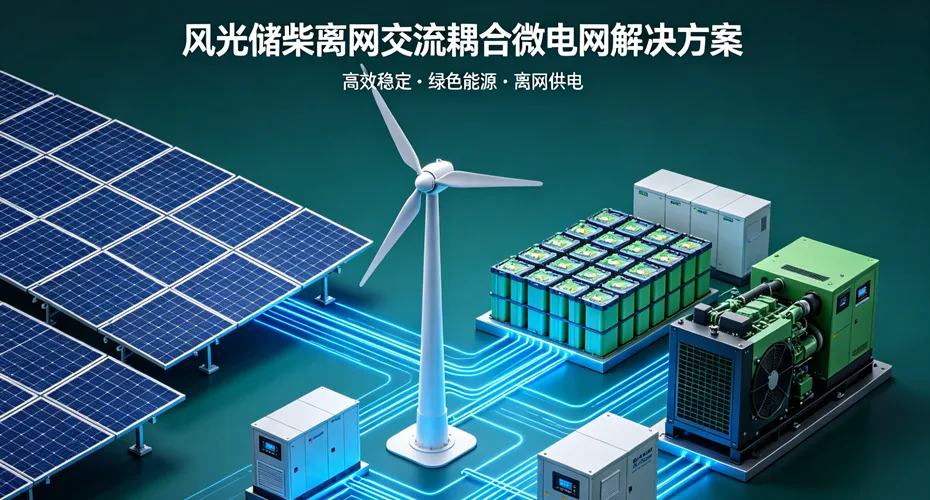
An off-grid energy storage microgrid (Off-grid BESS Microgrid) is an autonomous power system that does not rely on the public grid and independently completes the entire generation–storage–distribution–consumption process. It consists of distributed generation sources (PV, diesel generators, and wind power where necessary), energy storage batteries, power conversion systems (PCS), distribution units and an energy management system (EMS), and externally behaves as an independent power source with self-established voltage and frequency.
Compared with the common "PV + off-grid inverter" approach, the engineering difference between the two lies not in the inverter itself, but in power balancing capability. In a pure PV off-grid solution, PV output is uncontrollable and the load varies at any time, with no buffer in between, so balance can only be maintained by frequent diesel generator start/stop or direct load shedding, resulting in rapid genset wear, high fuel consumption and large voltage and frequency fluctuations. With energy storage added, the storage system simultaneously takes on three engineering roles:
- Power buffering — instantaneous power imbalances are absorbed or supplemented by the battery, allowing both the diesel generator and PV to operate under relatively stable conditions without having to follow the load with sharp adjustments;
- Voltage and frequency reference — the grid-forming PCS actively establishes the voltage amplitude and frequency reference, providing grid-connection conditions for grid-following equipment such as PV and gensets;
- Energy time shifting — surplus PV energy during the day is stored and released at night or on cloudy and rainy days, minimizing diesel generator operating hours.
Simply put, an off-grid microgrid solves not "whether there is power", but whether power can be supplied stably, economically and continuously without a grid.

System Architecture and Key Equipment
A complete off-grid energy storage microgrid can be divided by function into four layers, each with different engineering responsibilities.
1. Generation Layer: PV as the Main Source, Diesel as the Backstop
PV is the primary power source of an off-grid system, with the lowest levelized cost of electricity, no fuel dependency and low maintenance; the diesel generator provides backup for extended rainy periods. In engineering practice, the goal is generally not "zero diesel", but rather to set genset start/stop thresholds based on SOC (state of charge) and load forecasts, so that the genset intervenes only during prolonged low-irradiance periods while also taking battery cycle life into account.
Energy collection on the PV side is handled by MPPT controllers. The VGID POWER SP200/150HAPV series PV MPPT controllers feature an IP65 wall-mounted design, support 16 PV inputs (SP200)/12 inputs (SP150), and offer buck-boost conversion capability with a maximum conversion efficiency of 99.26%. The significance of multiple MPPT channels lies in resistance to shading and string mismatch — when the array is partially shaded by buildings, vegetation or cloud shadows, each channel tracks its own maximum power point independently, preventing one mismatched channel from dragging down the output of the entire string.
2. Storage Layer: Capacity Determines Duration, Power Determines Load
The basis for calculating battery capacity is the longest continuous period without sunlight and the average daily electricity consumption, rather than a simple estimate of "PV installed capacity × coefficient". On the power side, the maximum starting surge of loads must be calculated — the starting current of motors, water pumps and compressors can reach 5 to 7 times the rated value, and if the PCS does not have sufficient margin, it will trip immediately at startup.
In a DC-coupled architecture, PV, batteries and the PCS share a DC bus, and voltage matching and energy routing must be completed through DCDC modules. The VGID POWER SP120/60HCPV and SP105HCDC series DCDC modules adopt an isolated air duct design, achieve a maximum efficiency of 99.3%, accept a wide DC voltage input range and multiple PV inputs, support parallel connection of up to 15 units, and offer battery heterogeneity (SOC balancing) capability — when expanding an existing battery bank or mixing cells from different batches, this capability can significantly reduce consistency risks.
3. Conversion Layer: The Power Conversion System (PCS) Is the Core of the System
The PCS performs bidirectional conversion between DC and AC and establishes voltage and frequency in off-grid mode. Off-grid scenarios place the highest demands on the grid-forming capability of the PCS, because there is no large grid in the system to provide a reference, and the PCS must take over the role of a synchronous generator.
VGID POWER offers a range of grid-forming models for different power levels and installation conditions:
- SP135HAPSS series microgrid energy storage PCS — IP65 high-protection wall-mounted unit with a built-in on/off-grid transfer device and ATS dual AC input module, supporting diesel genset hybrid operation and parallel connection of multiple units, with a maximum bypass current of 230 A. Its ATS dual AC input design allows two power sources — "mains (if available) + diesel generator" — to complete transfer and interlocking within the same device, simplifying the system's primary circuit.
- SP125HCPS series microgrid energy storage PCS — aimed at small and medium-sized energy storage microgrids, supporting DC/AC coupling, with an optional model featuring a built-in STS (transfer time <10 ms), maximum efficiency of 98.5%, 125% overload capability and independent three-phase grid-connection control, and supporting heterogeneous battery connection.
- SP60/50/40/30HCG2 series hybrid inverters — with isolated air ducts and a wide DC voltage, high-current design, compatible with 280/314 Ah cells, built-in STS seamless transfer, support for dual MPPT channels, diesel genset hybrid operation and parallel connection of multiple units, 150% overload capability and maximum efficiency of 98.2%, suitable for small and medium-power distributed installations.
If the on/off-grid transfer on the AC bus needs to be a separate module, the optional STS200/400/600 series static transfer modules are available: transfer time <20 ms, seamless on/off-grid transfer, integrated grid-side/load-side bidirectional detection, LocalEMS and multiple communication interfaces including RS485/CAN/4G, and compatibility with on/off-grid transfer standards of multiple countries.
4. Management Layer: The EMS Determines Actual Returns and Battery Life
The EMS is responsible for dispatch strategies: whether PV supplies the load first or charges the battery first, at what SOC the genset starts, what depth of discharge to maintain, and how power is shared when multiple units operate in parallel. The strategy directly determines three core indicators: fuel consumption, battery cycle life and system availability. The EMS built into VGID POWER all-in-one products supports strategies such as peak shaving and valley filling, reverse power prevention and diesel-PV hybrid operation, and can be connected to upper-level monitoring via communication interfaces.
Three Typical Configuration Forms
In engineering practice, off-grid microgrids are divided into three forms by power level and degree of integration. When selecting, first determine the form, then the capacity.
Form 1: All-in-One — First Choice for Small and Medium-sized Scenarios
The PCS, MPPT, EMS, on/off-grid transfer switch, and AC/DC distribution units are integrated into a single cabinet, and on site only four interfaces need to be connected: PV, battery, load and diesel generator. The advantages are reduced design workload, a small footprint and fast commissioning.
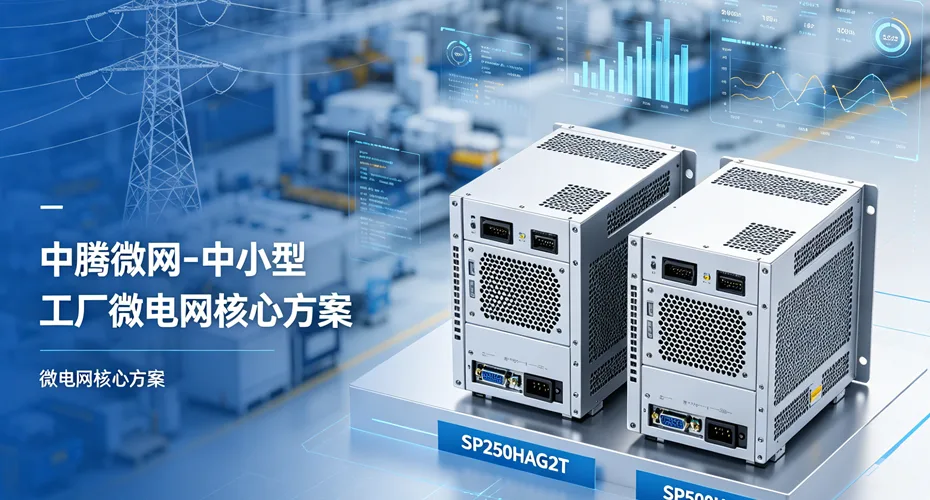
VGID POWER's flagship model is the SP250HAG2T PV-storage on/off-grid all-in-one unit: it integrates the PCS, MPPT, EMS, PCM on/off-grid transfer switch, AC/DC distribution units, genset control, surge protective devices and a built-in isolation transformer, and supports connection of diesel generators, PV and batteries. Its fast on/off-grid transfer time is 10 ms, its multi-channel DC-coupled charging efficiency is greater than 99.3%, it supports diesel genset hybrid operation and grid-forming operation, and can be expanded in capacity through parallel connection of multiple units. It is suitable for PV-storage-diesel microgrids and diesel-storage backup power sources for mines, among other scenarios.
If the project has additional requirements for voltage level or electrical isolation, the SP250HAG2T series (built-in isolation transformer variant) can be selected, with the isolation transformer built into the cabinet, eliminating the need for separate on-site step-up/isolation equipment.
Form 2: Series All-in-One — Medium and Large Power Scenarios
When loads reach hundreds of kilowatts to the megawatt level, larger power units and a higher protection rating are required. The SP375/500HAG2 series PV-storage on/off-grid all-in-one units integrate the PCS, MPPT, EMS, PCM on/off-grid transfer switch and AC/DC distribution units into one unit, with IP54 protection, charging efficiency >99.3%, fast on/off-grid transfer <20 ms, support for diesel generator/PV/battery connection, built-in EMS strategies for peak shaving and valley filling, reverse power prevention and diesel-PV hybrid operation, and support for parallel connection of multiple units.
Form 3: All-in-One Cabinet — Emergency Power and Construction
For scenarios requiring high-power centralized supply and rapid deployment, the SP750H54PSTD all-in-one cabinet provides 750 kVA of power per cabinet, integrating the PCS, EMS, isolation transformer and AC/DC distribution units internally, with an optional external STS (transfer time ≤20 ms), support for grid, diesel generator and battery connection plus a built-in PV connection switch, IP54 high protection, and support for parallel connection of multiple cabinets. It is suitable for emergency power, diesel-storage and construction site scenarios.
Capacity Design: Calculate Energy First, Then Power
Capacity design for off-grid projects has two independent objectives that must be calculated separately.
Step 1: Determine Battery Capacity Based on Daily Electricity Consumption
Calculate the average daily electricity consumption (kWh) and the longest continuous period without sunlight (days of autonomy). The usable battery capacity must satisfy:
- Usable capacity ≥ average daily electricity consumption × days of autonomy ÷ system efficiency
- Depth of discharge (DOD) is generally kept at 80%–90%; under a lithium iron phosphate system, prolonged full charge/discharge should be avoided
- System efficiency must account for PCS conversion losses, DCDC losses and line losses; the engineering value is typically 85%–92%
Step 2: Determine PCS Power Based on Load Characteristics
- Calculate the total rated load power and the maximum simultaneity factor to obtain the steady-state power demand;
- Separately calculate the starting current of inductive loads (motors, water pumps, compressors, air conditioners), and verify by superimposing the largest single startup surge on the remaining steady-state loads;
- Reserve 20%–30% power margin for future load growth and power sharing margin during parallel operation of multiple units.
For example: a village in Africa consumes an average of 240 kWh per day, requires 1 day of autonomy, and the system efficiency is taken as 0.9, so the usable capacity must be ≥ 240 × 1 ÷ 0.9 ≈ 267 kWh; if daytime PV is sufficient to cover most of the load, the actual configuration can be moderately reduced in combination with the PV output curve. On the power side, if several water pump motors total 120 kW with a maximum of 45 kW for a single unit, verified at 6 times the starting current and taking the simultaneity factor into account, the PCS selection must be above 150 kW with sufficient overload capability.
Typical Application Scenarios
Island Microgrids
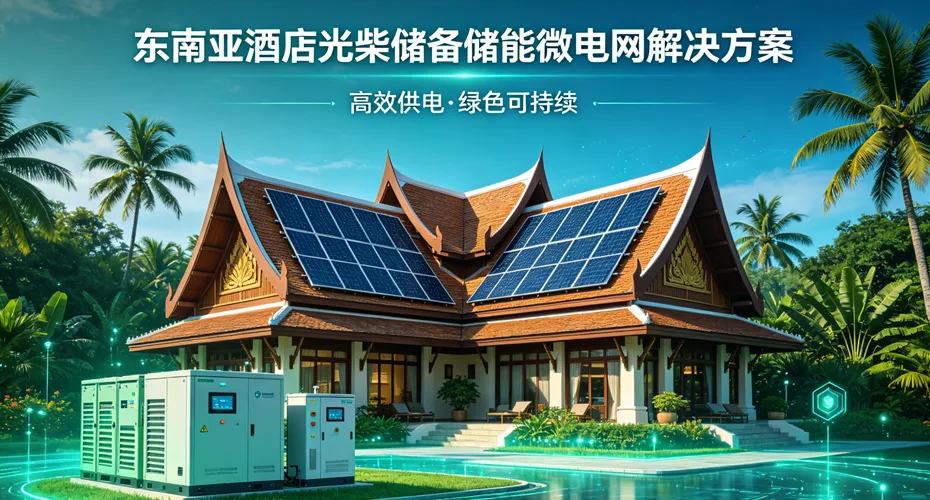
Independent power supply for Southeast Asian islands, replacing high-cost diesel generation, with salt-spray protection and typhoon-resistant design requirements
African Village Microgrids
PV-diesel-storage hybrid microgrids providing basic electricity to areas without power, with low O&M requirements and remote monitoring capability
African Mining Microgrids
Mine loads are large and highly surge-prone, requiring PCS overload capability to be verified against heavy-load startup
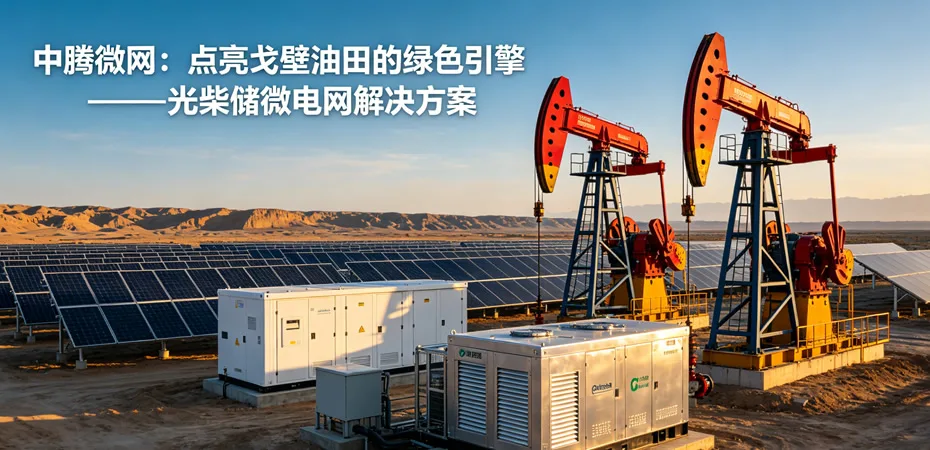
Oilfield Production Microgrids
Pumping units are cyclic surge loads; coordinated PV, diesel and storage can significantly reduce diesel consumption
Middle East Villa Microgrids
Stable power assurance for high-end residential and commercial scenarios, accommodating high-power loads such as air conditioning
Remote Farms and Pastoral Areas
Productive loads such as irrigation pumps and feed processing, with long supply radii and prone to voltage drop at the far end
Mobile Energy Storage Vehicles
Flexible emergency and temporary power supply for repairs, construction and large events
Communication Base Stations and Border Posts
Small capacity, long-duration operation, with the focus on reliability, maintenance-free operation and remote alarms
Key Engineering Implementation Points
1. Load Classification and Supply Assurance Boundaries
An off-grid system must clearly define "which loads must be assured". They are usually divided into three levels: Level 1 covers critical loads such as lighting, communications, medical care and security; Level 2 covers productive loads; Level 3 covers interruptible loads (such as some air conditioning and non-critical processing equipment). Capacity configuration is based on Level 1 + Level 2, and Level 3 loads are actively shed by the EMS when battery SOC is low, preventing a total site power outage.
2. Grounding Configuration and Protection Settings
An off-grid system has no grounding reference provided by the grid side, so the grounding configuration must be determined at the design stage. A common practice is to solidly ground or impedance-ground the neutral point on the AC side of the PCS, and to provide independent residual current protection and insulation monitoring. Surge protection must cover both the PV DC side and the AC side; all-in-one products usually have built-in surge protective devices, but on-site down conductors and grounding resistance still need to be calculated separately.
3. Parallel Operation of Multiple Units and Power Sharing
When capacity exceeds that of a single unit, multiple units are connected in parallel. Three points require attention in engineering: whether the parallel-operation protocols of the models are consistent, whether the communication links are redundant, and whether the power sharing strategy is equal sharing or master-slave. Several VGID POWER models (SP250HAG2T, SP375/500HAG2, SP135HAPSS, SP125HCPS, SP60HCG2) support parallel connection of multiple units; when expanding, models of the same series and power rating should be preferred to avoid circulating currents and dispatch complexity caused by mixed-model parallel operation.
4. Environmental Adaptability and Protection Rating
Outdoor deployment requires selecting the protection rating according to site conditions: IP65 is suitable for wall-mounted installation positions requiring rain and dust protection (SP135HAPSS, SP200/150HAPV); IP54 is suitable for all-in-one cabinets (SP375/500HAG2, SP250HAG2T). In high-temperature, high-humidity and high-salt-spray areas, isolated air duct designs should also be considered (SP60HCG2 and SP120/60HCPV both use isolated air ducts) to slow the aging of electronic components.
5. Commissioning and Acceptance
Commissioning in the following order is recommended: first verify voltage and frequency output with a single unit under a dummy load, then connect PV to verify MPPT tracking and power limiting logic, then connect the battery to verify charge/discharge switching and SOC calibration, and finally connect the diesel generator to verify hybrid start/stop and on/off-grid transfer. Acceptance should focus on measured transfer time, steady-state voltage deviation, frequency fluctuation range, harmonic distortion rate and genset startup success rate.
Frequently Asked Questions
Q: Does an off-grid system always need a diesel generator?
Not necessarily, but keeping one is recommended. If local sunlight conditions are stable and the days-of-autonomy requirement is not high, a pure PV-storage configuration can be feasible in some projects; once prolonged rainy weather occurs, a pure PV-storage system can only respond by increasing battery capacity or shedding load, and the marginal cost of increasing battery capacity is often higher than that of installing a small diesel generator. The common engineering practice is "PV-storage as the main source, diesel as the auxiliary", with the genset capacity selected according to the steady-state power of Level 1 loads, without needing to be sized for the site's peak demand.
Q: Is a larger battery capacity always safer?
No. Oversized capacity raises the initial investment on the one hand, and on the other hand the battery operating in a low SOC range or under shallow cycling for long periods can actually worsen consistency differences within the battery bank. Capacity should be calculated precisely based on days of autonomy and daily electricity consumption, with a reasonable SOC operating window reserved.
Q: What is the point of on/off-grid transfer in an off-grid system?
Many so-called "off-grid" projects are actually "weak grid" or "intermittent supply" scenarios — mains power during the day and outages at night, or fixed outages of several hours each week. Such projects must use on/off-grid models, with the PCS performing bidirectional transfer; pure off-grid models cannot feed back into the grid, nor can they automatically switch back when the grid is restored.
Q: Will PV output fluctuations cause unstable voltage and frequency?
This is precisely the core value of the energy storage system. The grid-forming PCS establishes the voltage and frequency reference, the battery provides instantaneous power support, PV fluctuations are absorbed by the storage system, and the load side does not perceive them. If grid-following equipment is used without energy storage, PV fluctuations will be transmitted directly to the load.
Q: Can the equipment be operated and maintained remotely?
Yes. VGID POWER products generally support RS485/CAN/4G communication interfaces and can upload operating data to a monitoring platform, enabling remote viewing of SOC, charge/discharge power, alarm status and fault records. For projects with inconvenient transportation such as islands and mining areas, remote O&M capability is key to reducing lifecycle costs.
Project Photos
Contact Us
For island, village, mining, oilfield, farm or emergency power supply scenarios, VGID POWER can provide a complete off-grid energy storage microgrid solution from capacity calculation, solution design and equipment selection to commissioning and delivery. You are welcome to contact us for solution design and quotations.
No products in this category yet.